Your Tinder profile, reviewed. See what's costing you matches
Your photos, their order and your bio are reviewed together. You get a profile score, an estimated like rate and exactly what to do with each shot, in priority order.
No sign-up First review is free Under 2 minutes
The same Tinder profile, before and after one photo change
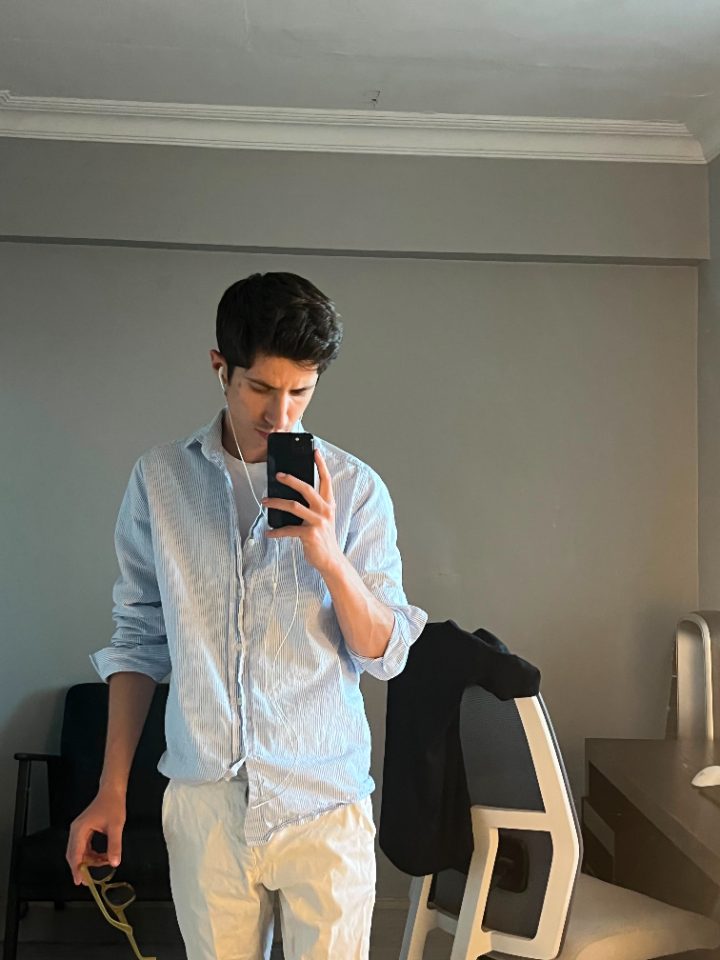 BEFORE
0
BEFORE
0
Face is hiddenIndoor mirror, eyes down, phone across the face.
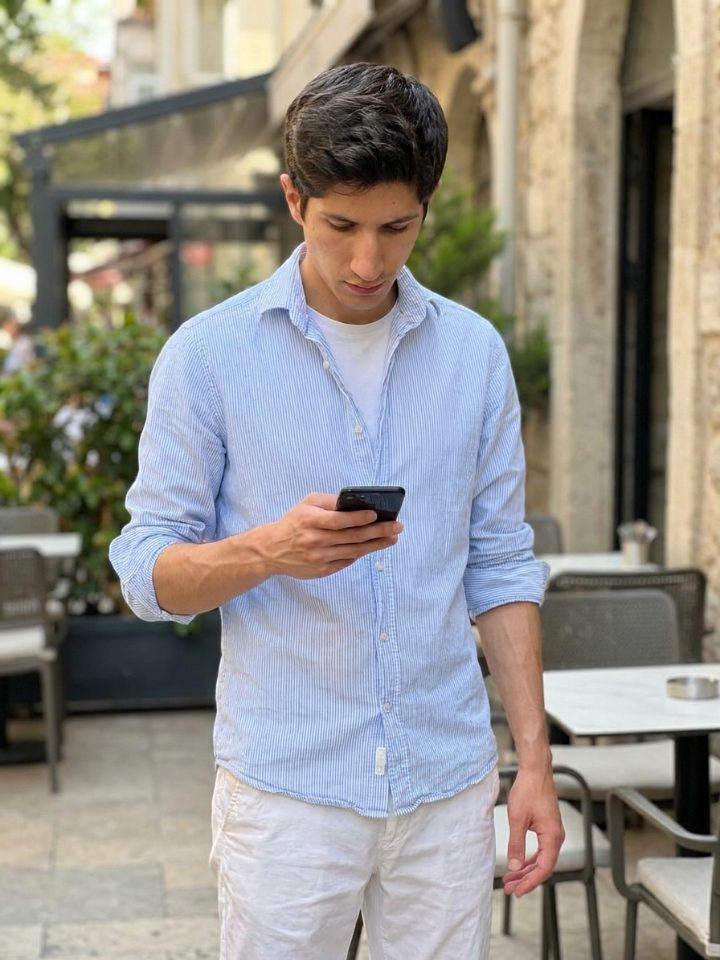 AFTER
0
AFTER
0
Reads in one secondDaylight, clear face, relaxed posture.
RateSelf tells you which shot should lead, what to change in each one, and rebuilds your weakest photo so you can see the version that works before you post it.
One example. Your profile gets its own read.
Short answer: A Tinder profile review scores every photo you actually use, checks your photo order and bio, and tells you exactly what to change first. RateSelf's AI does the first review free, in about two minutes, no sign-up.
Last updated:
Nobody swiped left on you. They swiped left on one photo
Here is the part that stings: the people scrolling past you never actually saw you. They saw a card. One image, thumb already moving, brightness turned down, somewhere between the couch and falling asleep. Then the next card. That’s the entire transaction, and it repeats all night.
So when you get no matches on Tinder for weeks and the app starts feeling like a ghost town, the instinct is to swipe harder. Right on everybody. Clear the deck, play the numbers. It almost never works, and most people who try it end up with fewer matches than before, not more.
The volume isn’t the problem. The card is. And the good news buried in that is that a card is a fixable object. You can’t make strangers slow down, but you can absolutely change what they see in that glance — the lead photo, the order behind it, the two lines of text underneath, and the settings deciding who gets shown the thing at all.
What a Tinder photo actually has to survive
Forget how a picture looks on your phone at full screen. A Tinder photo gets judged as a small rectangle, at speed, by someone who isn’t trying very hard. That’s a brutal filter, and it kills photos that are objectively good ones. The wedding shot where you are in a tux next to three groomsmen. The bar picture where the flash blew out half your face. The mirror selfie in a gym with the overhead lights doing that thing to your eyes.
Across the 368 photos our reviewer has scored, the same handful of problems keep coming back — 33.2% were shot in light too dim for a face to read, and in 8.4% the face is cropped small, turned away, or parked behind sunglasses. Not bad-looking people. Unreadable ones.
There is also an American cliché problem that is very real and very specific. The bass held out toward the camera. Ski goggles. The Vegas group photo. Coachella. Leaning on a car that isn’t yours. Every one of these has already gone past the person holding the phone more times than they could count, and familiarity reads as forgettable.
What survives instead is unglamorous:
- Daylight. Outside, or standing a few feet from a window. Not a flash, not a ceiling light, not a bar.
- A face big enough to read at thumbnail size. Roughly head-and-shoulders to waist up. If you’ve to squint to find yourself, so does everyone else.
- Eyes visible. Sunglasses in the lead photo are the single easiest self-inflicted wound on the app.
- A real expression. Not a smolder. A friend making you laugh is worth more than a photographer.
- A background that isn’t your bedroom. Clutter behind you gets read as a whole story about your life, fairly or not.
Grab a friend on a Saturday afternoon, walk outside, take forty pictures on a normal phone. Four of them will beat everything currently on your profile.
Tinder photo order is the part almost nobody edits
Most people upload whatever the camera roll handed them and never touch it again. But Tinder photo order is doing real work, because the slots aren’t equal. The first one decides whether anyone looks at the second. The second and third answer a different question entirely — what is this person’s life actually like? — and the last two are just there to confirm you are a consistent human being.
Which means the classic mistakes are ordering mistakes, not photography mistakes:
- The group shot leading. Nobody plays guess-which-one. They swipe.
- Your best photo sitting in slot four. It might as well not exist.
- Five versions of the same photo. Same angle, same shirt, same trip. The set should show range, not repetition.
- Nothing full-body anywhere. Its absence gets noticed, and it gets interpreted.
- A lead photo you’ve had up for two years. If you went from steady matches to no matches on Tinder, this is the first thing to change.
A sequence that works usually goes: clear face, full body, you doing something you actually do, one with other people in it, one with a dog or a hobby or a place that says where you spend your time. That order is a suggestion, not physics — but it beats camera-roll order every single time.
Your Tinder bio is a reply prompt, not a résumé
Nobody has ever matched with someone because of their Tinder bio. But an enormous number of people have decided not to send a message because the bio gave them nothing to say. That’s the actual job: hand a stranger a sentence they can answer without thinking hard.
95% of the bios we scored came back at 2 or lower out of 10. And it is almost always for the same reasons. Empty. Or one of the lines everyone has already read far too many times — 6-foot-2 since apparently that matters, fluent in sarcasm, love to travel, tacos and adventure, partner in crime, here for a good time not a long time, just ask. These aren’t offensive. They’re wallpaper. They tell a reader nothing they could not have guessed, and they leave nothing to reply to.
Specific beats clever, every time. Currently working through every taco truck on Cesar Chavez, three in, taking recommendations is a worse joke than most bios and a far better bio, because it is answerable. So is naming the actual band, the actual neighborhood, the actual weird hobby. Two or three lines is plenty.
And say what you are looking for, plainly. Most people are strangely allergic to this, and it costs them — vagueness reads as either commitment-phobic or dishonest, depending on the reader’s mood. One honest line about whether you want something serious saves everybody a week.
The Tinder settings that quietly shrink your feed
Before you rebuild anything, rule out the boring explanation. Some of the worst stretches of no matches on Tinder aren’t a content problem at all — they are Tinder settings doing exactly what you told them to do, months ago, and then never being looked at again.
The distance slider is the big one in this country, because it means completely different things in different places. Five miles in Manhattan or Chicago is an entire dating market. Five miles in Phoenix, Atlanta, Dallas, or basically any metro built around a highway is a stretch of strip malls and two apartment complexes. If you live somewhere that requires a car, a radius that small isn’t selectivity, it is a blackout.
Then run down the rest:
- Age range. A four-year window feels reasonable and is brutally narrow in practice.
- “Show me on Tinder.” People turn this off during a relationship or a bad week and genuinely forget. Your profile is invisible the whole time.
- Location drift. Moved cities, or spent a stretch traveling with Passport on? Confirm the app knows where you actually are.
- Small-market reality. A college town in July or a rural county is a thin pool, and no photo fixes arithmetic. Widening the radius is the only real lever.
We can’t see any of this — settings live in your account, not in the photos you upload — so this one is a checklist you run yourself, and it takes ninety seconds.
What we can see, and what we can’t
Worth being blunt about this, because the internet is full of people who aren’t.
What we look at: the images and the bio text you give us. The reviewer scores lighting, framing, whether a face is readable at small size, expression, background, how much the shots repeat each other, and whether the writing gives a stranger anything to respond to. Then it tells you what to change, photo by photo and line by line, and suggests an order.
What we don’t have any access to: who swiped on you, how often your card was shown, where you sit in anyone’s queue, or how the app ranks accounts. That data lives inside the company and it doesn’t come out.
What we’ve not measured, and won’t pretend to: the best time of day to be swiping, how many right swipes it takes to get a match, whether Boost is worth the money, or what any change did to your match rate afterward. Those numbers get thrown around constantly online. Nobody outside the company is in a position to know them, us included.
Those numbers come from the 368 photos people have run through this tool — our own review data, not an industry study or a survey. So what you get is a genuinely useful thing with an honest ceiling: a second opinion on the part of this you actually control. Sometimes the answer comes back that the photos are fine and the market is thin. We would rather tell you that than sell you a number.
Rebuild your Tinder profile in one afternoon
This isn’t a months-long project. A whole Tinder profile can be rebuilt between lunch and dinner, and most of that time is the walk outside.
- Shoot new photos in daylight. Forty frames, a friend, no mirror, no filter.
- Pick five or six that are genuinely different from each other.
- Put the clearest face shot first. Move the group photo to last, or cut it.
- Rewrite the bio down to two or three specific lines, one of which a stranger could answer.
- Fix the distance slider and the age range. Confirm your profile is actually visible.
- Run the set through the reviewer and do what it says, including the parts you don’t want to hear.
Change things in a batch and give it a couple of weeks before judging. Swapping one photo every other day just leaves you unable to tell what helped — and it turns a fixable afternoon into a month of quiet frustration.
What does a Tinder profile review actually check?
A Tinder profile review looks at the three things a stranger judges in seconds: your photos, their order, and your bio.
Every photo you actually use gets a score — lighting, framing, whether your face reads at thumbnail size — and the review flags the one costing you matches.
You also get an estimated like rate, a suggested order, and the single fix to make first.
The first review is free, takes about two minutes, and needs no sign-up.
If the photos are fine and the market is thin, it says that too.
Why am I not getting matches on Tinder?
There are two separate questions hiding in that one. The first is how many people see your profile at all, and the second is what they do when they see it. If your profile is being shown normally but nobody swipes right, the problem is the profile itself. If swiping activity has dropped off across the board, you are usually being shown to fewer people because engagement on your profile has been low for a while. A review cannot see the app side, but it can tell you whether the profile is giving people a reason to swipe right in the first place.
Why did my matches suddenly stop on Tinder?
A sudden drop almost never means the app broke. Three things cause it. You changed something recently — a new main photo, a rewritten bio, a different age or distance setting — and the change performed worse than what it replaced. Or your activity pattern changed: long gaps between sessions, or a burst of swiping right on everything, both reduce how widely you get shown. Or nothing changed on your side and the local pool simply thinned out. Start by putting back whatever you changed last, then look at the profile itself.
Am I shadowbanned on Tinder?
Dating apps do not confirm shadowbans, and most cases people describe are not one. What usually happens is ordinary distribution: profiles that get swiped past repeatedly are shown to fewer people over time, which feels identical to being hidden. A real restriction normally follows a report or a terms violation and usually comes with a notice. Before assuming you are banned, check whether your first photo is actually giving anyone a reason to stop — that is the far more common explanation.
I get likes but no matches on Tinder. Why?
Likes coming in means your profile is being distributed and the first photo is working. If those do not turn into matches, the drop is happening when you swipe, not when they do — you are being selective, which is normal. The version of this that is worth fixing is the reverse: plenty of people see you, few like you. That points at the photos after the first one, an empty bio, or a set that all looks the same. The per-photo scores show exactly which shot loses them.
How many matches is normal on Tinder?
There is no universal number, and any site quoting one is guessing. It swings enormously with your city, your age range, how far you are willing to travel and how many people are active near you. A useful benchmark is your own history: compare this week to a week when the same profile was doing better. If the profile changed in between, that change is your suspect. If nothing changed, the pool did.
Should I delete my Tinder account and start over?
Usually not, and it is the most over-recommended advice on the internet. A new account can get a short visibility bump, but it also throws away your existing matches and conversations, and the profile that was not working is still the profile you rebuild with. Fix the photos and the order first. If you rebuild without changing anything, you land back where you started within a couple of weeks.
Does paying for Tinder get you more matches?
Paid features buy you visibility, not appeal. More people see your profile, but the decision they make when they see it is unchanged. If your main photo is the problem, paying puts a weak profile in front of a larger audience and the result is more people swiping past. Fix what the profile says about you first; paid visibility is worth far more once the profile itself is converting.
Is it true that 75% of Tinder users are men?
Most public estimates put men well above half of the user base, and in many cities closer to three-quarters; we have not measured it and cannot confirm an exact figure. What the ratio changes is the arithmetic: as a guy you compete for fewer right swipes, so a lead photo that is merely fine gets skipped. It does not mean the market is hopeless. It means the margin for a weak first photo is thinner, and the order behind it matters more.
How do you trick Tinder into giving you more likes?
You do not, and the popular tricks cost you. Swiping right on everyone marks you as low-effort and shrinks who you are shown to; deleting the account rebuilds with the same photos; Boost shows a weak card to more people. None of them change what a stranger decides in the second they see you. The only lever that is fully yours is the card itself: first photo, order, two lines of text. Fix that and the likes follow without a trick.
Is the Tinder 0 likes counter a bug?
Almost never. On the free plan the like count is blurred, so many people who report zero likes actually mean they cannot see the number. If you can see the count and it has stayed at zero for days, treat it as a lead photo problem rather than a technical one: the face is too small, too dark, or hidden, and nobody is stopping long enough to like. A free review shows which photo is doing that.
What makes a good main photo on Tinder?
One person, clearly you, face large enough to read on a small screen, lit from the front, eyes visible, and a genuine expression rather than a held pose. No sunglasses, no cap pulled low, no group shot where a stranger has to work out which one you are, and no mirror selfie as the opener. Everything else — the gym shot, the travel shot, the friends shot — belongs later in the set, where it adds range instead of costing you the first second.
How many photos should I upload?
One photo is enough to get a review. Upload every shot you use on Tinder and you also get an ordering recommendation — order is the most overlooked factor in how long your profile stays open.
What happens to my photos?
Your photos are processed for the review only. They are never shared and never published, and you can ask for them to be deleted after the review.
What do I get in the free review?
Your profile score, a first-impression read and your single most critical fix are free. Per-photo scores, the full breakdown, a ready-to-paste bio and the AI-enhanced photo preview unlock with a package. There is no subscription — packages are one-time payments.
Your photos are processed for the review only. Never published, never shared; deleted whenever you ask. Privacy Policy · Terms of Use