No matches on Bumble? Your bio has to give her a line
No matches on Bumble usually comes down to a main photo that does not read at thumbnail size, a bio that gives her nothing to open with, or a photo order that buries your best shot. This free review scores your profile, estimates your like rate, and tells you what to change first.
No sign-up First review is free Under 2 minutes
The same Bumble profile, before and after one photo change
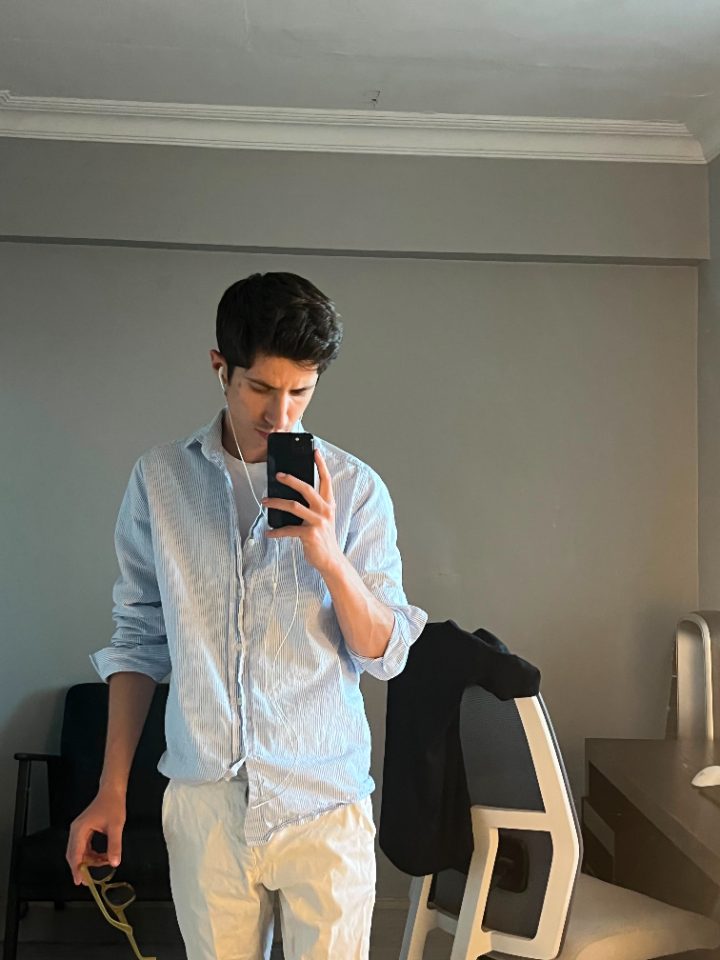 BEFORE
0
BEFORE
0
Face is hiddenIndoor mirror, eyes down, phone across the face.
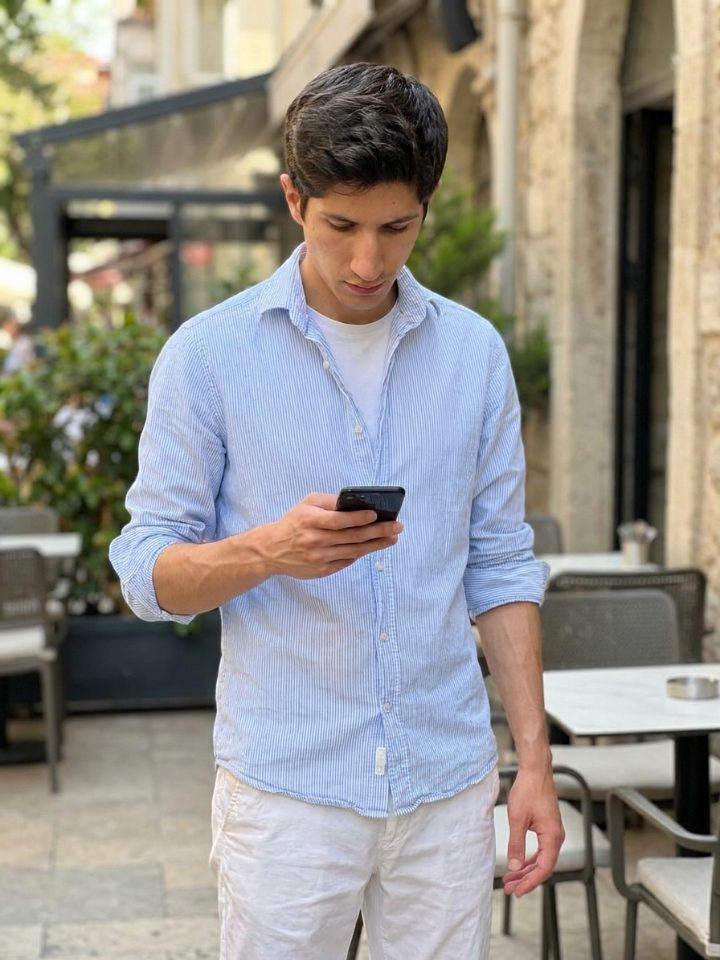 AFTER
0
AFTER
0
Reads in one secondDaylight, clear face, relaxed posture.
RateSelf tells you which shot should lead, and reads your bio for the one line she can actually reply to — then rebuilds your weakest photo so you can see the version that works before you post it.
One example. Your profile gets its own read.
Short answer: No matches on Bumble almost always traces back to a few fixable things: a cover photo that is unreadable at thumbnail size, a photo order that buries your strongest shot instead of leading with it, a bio that is empty or too generic for her to reply to, and discovery settings set too narrow for your area. On Bumble the woman has to write first, and the match expires in 24 hours if she does not, so a weak bio costs you the conversation, not just the swipe. RateSelf reviews your photos and bio for free and tells you exactly what to change first.
Last updated:
Bumble no matches? There are two different problems hiding in that sentence
On Bumble, “no matches” almost never means one thing. It means one of two, and they have opposite fixes.
The first is that nothing comes in at all. You swipe, the queue moves, nothing comes back. That is a photo problem, or a settings problem, and it is the same problem it would be on any app.
The second is the one people describe as no matches when it is not. Matches arrive, sit there, and quietly vanish a day later. On Bumble a match expires in 24 hours if the woman does not send the first message. Nobody writes, the match disappears, the app looks empty — and it feels identical to never matching at all.
The difference matters because the fixes point in opposite directions. If nothing comes in, work on the first photo. If matches come in and die, the first photo is already doing its job and the problem is that your profile gives her nothing to open with.
Before either, rule out the boring one. Open your filters and check the distance radius, the age range, and whether your profile is actually visible. A five-mile radius outside a dense city is not selectivity, it is a blackout. That check takes a minute and it settles whether you have a profile problem or an arithmetic problem.
Why your Bumble matches disappear before anyone writes
This is the Bumble-specific failure, and it is not a bug. The match expires because the clock ran out on her side, not yours.
Put yourself in the queue she is looking at. She has a stack of matches, 24 hours each, and no obligation to any of them. She is not deciding whether you are attractive — the match already settled that. She is deciding which of these is easiest to say something to.
The profile that gets written to is the one with a visible handle: a place she recognises, an opinion she wants to argue with, something odd in a photo she has to ask about. A profile can be genuinely good-looking and still be the hardest one in the list to open. That is the gap.
Three things reliably cause matches to expire:
- A bio made of adjectives. “Easygoing, love to travel, looking for someone genuine” gives her nothing. There is no sentence in it she can reply to.
- A photo set with no question in it. Five clean portraits and nothing else. Nothing to ask about, so nothing gets asked.
- A profile that reads as closed. Sunglasses, arms crossed, no eye contact, a list of what you do not want. All of it says do not approach.
Extending the window does not fix this. Paying to keep a match alive for another 24 hours buys another day of the same silence, because the reason she did not write on day one is still sitting there on day two.
Your Bumble bio is the opening move, not a description
On most apps the bio is decoration. On Bumble it is the thing she has to work from, because she is the one who has to speak first. That single rule changes what a good bio is.
A working Bumble bio does three jobs in about three lines.
- One concrete detail instead of a category. Not “I love food” but “I will drive across town for good dumplings.” Concrete gives her a reply. Categories do not.
- One thing that is slightly arguable. A ranking, a mild opinion, a preference someone could push back on. Disagreement is the easiest message anyone ever sends.
- One open door. A question, or a sentence that obviously invites one. Not “ask me anything” — that puts the work back on her.
What this looks like in practice, for men who keep hearing that their bio is fine:
- “Convinced the best meal in this city is under twelve dollars. Willing to be proven wrong, in person.”
- “I run on Sunday mornings so I can justify the pizza on Sunday night. It is a system.”
- “Two years of climbing and still scared at four metres. Improving, slowly.”
- “I will lose an argument about films but never about breakfast.”
Notice what none of them do: none list qualities, none say what they are looking for, none announce that they hate small talk. Every one of them hands her a sentence she could answer in ten seconds.
The most common failure is not a bad bio. It is an empty one, or one built entirely out of what the person does not want. A bio that opens with a list of refusals reads as someone already tired before saying hello.
The first photo still decides whether the bio gets read at all
None of the above matters if she never reaches the profile. The first photo is still the gate, and on Bumble it gets judged the same brutal way: small, fast, by someone who is not trying hard.
What survives that filter is unglamorous.
- Daylight. Outside, or a few feet from a window. Not a flash, not a ceiling light, not a bar.
- A face big enough to read at thumbnail size. Head-and-shoulders to waist up. If you have to look for yourself, so does she.
- Eyes visible. Sunglasses in the lead photo are the easiest self-inflicted wound on any dating app.
- A real expression. A held pose reads as guarded. Someone making you laugh beats a photographer.
- One person. A group photo in the first slot makes her solve a puzzle before she can be interested, and most people do not bother.
Then the order. The lead photo earns the stop; photos two and three decide whether she keeps going. Those two should not repeat the first. If all five are the same crop of the same face, the profile answers one question and then stops giving.
A Bumble-specific note: because she has to write, a photo with something visible in it to ask about is worth more here than on other apps. A recognisable place, an instrument, a badly behaved dog. Not a prop — something true that happens to be askable.
The Bumble settings that quietly shrink who sees you
Some of the emptiest stretches are not content problems at all. They are settings doing exactly what you told them to do months ago and never being looked at again.
- Distance. The single biggest lever, and it means different things in different places. Five miles in a dense city is a whole market. Five miles in a car-built metro is two apartment complexes.
- Age range. A four-year window feels reasonable and is brutally narrow in practice.
- Visibility. People switch themselves off during a relationship or a bad week and genuinely forget. The profile is invisible the entire time.
- Location drift. Moved cities, or travelled with a paid location feature on? Confirm the app knows where you actually are.
- Small market reality. A university town in July, or a rural county, is a thin pool. No photo fixes arithmetic; widening the radius is the only real lever.
We cannot see any of this — settings live in your account, not in the photos you upload — so this one is a checklist you run yourself. It takes ninety seconds and it settles a question that otherwise costs you weeks.
What a Bumble profile review can see, and what it can’t
Worth being blunt, because the internet is full of people who are not.
What we look at: the photos and the bio text you give us. The reviewer scores lighting, framing, whether a face reads at small size, expression, background, how much the shots repeat each other, and — for Bumble specifically — whether the writing gives someone a sentence to reply to. Then it tells you what to change, photo by photo and line by line, and suggests an order.
What we have no access to: who swiped on you, how often your profile was shown, where you sit in anyone’s queue, or how the app ranks accounts. That data lives inside the company and it does not come out.
What we have not measured and will not pretend to: the best time of day to swipe, how many right swipes produce a match, whether a paid boost is worth the money, or what any change did to your match rate afterwards. Those numbers get thrown around constantly. Nobody outside the company is in a position to know them, us included.
So what you get is a useful thing with an honest ceiling: a second opinion on the part of this you actually control. Sometimes the answer comes back that the photos are fine and the local pool is thin. We would rather tell you that than sell you a number.
Fix your Bumble profile in one sitting
In order, because the order is most of the value.
- Settings first. Ninety seconds. Distance, age range, visibility. Rule out the boring explanation before you rebuild anything.
- Lead photo second. One person, daylight, face readable at thumbnail size, eyes visible. If you only change one thing, change this.
- Photos two and three. Make them not repeat the first. Different setting, different distance, ideally something askable in frame.
- Bio last, but do it. Three lines: one concrete detail, one arguable thing, one open door. On Bumble this is the step people skip and it is the one that decides whether a match turns into a conversation.
- Then change one thing at a time. Give each change five to seven days at your normal swiping volume before judging it. Changing four things at once tells you nothing about which one worked.
Why do I get no matches on Bumble even with good photos?
Four things cause it almost every time, and on Bumble they are not in the same order as on Tinder.
First, the main photo does not read in the opening second, face too small, too dark, or lost in a group.
Second, the bio gives her nothing to open with, so the match expires unanswered at the 24-hour mark; on Tinder an empty bio costs you a little, here it costs you the conversation.
Third, the order is wrong and your strongest shot sits in slot three where nobody scrolls to it.
Fourth, the set has no variety, and five near-identical photos give a viewer nothing to hold on to.
The free review tells you which one is costing you most, and the order to fix them in.
Why am I getting no matches on Bumble all of a sudden?
A sudden drop is usually discovery settings, not your profile. Bumble limits how far and how often you show up, so a narrow age range, small distance radius, or a recent location change can quietly cut your visibility. Low recent activity on your account also pushes you lower in the stack. The free review checks your photos and bio first, since those are what she sees once you do show up.
Why do my Bumble matches expire before anyone writes?
Because the profile gives no obvious way in. She has 24 hours and a queue of matches; the one that gets written to is the one with a visible line to pull on — a recognisable place, an opinion, something odd in a photo. A profile can be perfectly good-looking and still be the hardest one in the list to message. That is the gap the review is looking for.
Why did my matches suddenly stop on Bumble?
A sudden drop almost never means the app broke. Three things cause it. You changed something recently — a new main photo, a rewritten bio, a different age or distance setting — and the change performed worse than what it replaced. Or your activity pattern changed: long gaps between sessions, or a burst of swiping right on everything, both reduce how widely you get shown. Or nothing changed on your side and the local pool simply thinned out. Start by putting back whatever you changed last, then look at the profile itself.
Am I shadowbanned on Bumble?
Almost certainly not. Bumble already feels emptier than Tinder on the same photos, for a reason that has nothing to do with bans: matches expire at 24 hours, so the ones nobody wrote to quietly disappear and the app looks dead. Ordinary distribution does the rest — profiles that get passed repeatedly are shown to fewer people over time, which feels identical to being hidden. A real restriction follows a report or a terms violation and normally comes with a notice. Check the first photo and the bio before assuming anything else.
I get matches on Bumble but nobody writes. Why?
This is the Bumble-specific version of the problem, and it is not the same as getting no matches at all. A match means the photos did their job; the silence after it is about what the profile gives her to say. She has 24 hours, a queue of matches, and no obligation — so the profile that gets written to is the one with something to grab: a place she recognises, an opinion worth arguing with, something odd in a photo she has to ask about. A bio of adjectives gives her nothing, and the match runs out. The review reads your bio for that missing line and tells you which photo would have prompted a question.
How many matches is normal on Bumble?
There is no universal number, and any site quoting one is guessing. It swings enormously with your city, your age range, how far you are willing to travel and how many people are active near you. A useful benchmark is your own history: compare this week to a week when the same profile was doing better. If the profile changed in between, that change is your suspect. If nothing changed, the pool did.
Should I delete my Bumble account and start over?
Usually not, and it is the most over-recommended advice on the internet. A new account can get a short visibility bump, but it also throws away your existing matches and conversations, and the profile that was not working is still the profile you rebuild with. Fix the photos and the order first. If you rebuild without changing anything, you land back where you started within a couple of weeks.
Does Bumble Premium or Boost get you more matches?
They buy visibility and time, not appeal. Boost puts you in front of more people; Premium lets you extend a match past the 24-hour window. Neither changes what someone decides when they look at your profile, and extending a match that gave her nothing to say only buys another day of silence. Fix the first photo and the bio first — paid features are worth far more once the profile itself is converting.
What makes a good main photo on Bumble?
One person, clearly you, face large enough to read on a small screen, lit from the front, eyes visible, and a genuine expression rather than a held pose. No sunglasses, no cap pulled low, no group shot where a stranger has to work out which one you are, and no mirror selfie as the opener. Everything else — the gym shot, the travel shot, the friends shot — belongs later in the set, where it adds range instead of costing you the first second.
How many photos should I upload?
One photo is enough to get a review. Upload every shot you use on Bumble and you also get an ordering recommendation — order is the most overlooked factor in how long your profile stays open.
What happens to my photos?
Your photos are processed for the review only. They are never shared and never published, and you can ask for them to be deleted after the review.
What do I get in the free review?
Your profile score, a first-impression read and your single most critical fix are free. Per-photo scores, the full breakdown, a ready-to-paste bio and the AI-enhanced photo preview unlock with a package. There is no subscription — packages are one-time payments.
Your photos are processed for the review only. Never published, never shared; deleted whenever you ask. Privacy Policy · Terms of Use