No matches on Bumble? Your bio has to give her a line
On Bumble the match expires in 24 hours if she does not write, so the bio is not decoration — it is the opening. Your photos, their order and your bio are reviewed together: a profile score, an estimated like rate, and what to change first.
No sign-up First review is free Under 2 minutes
THE SAME PERSON, AFTER THE FIX
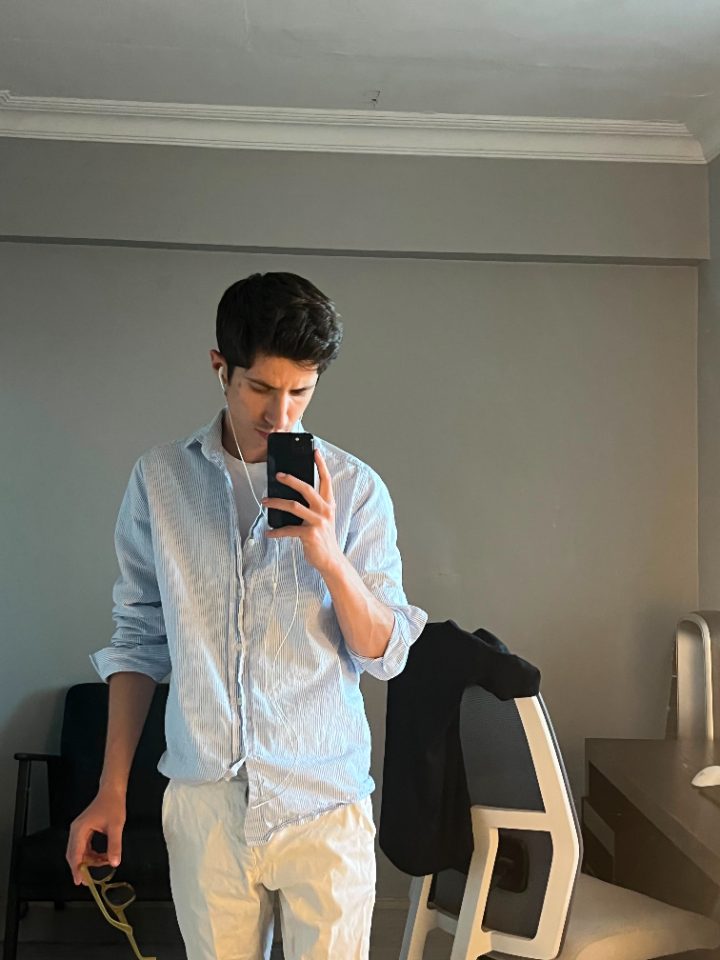 BEFORE
0
BEFORE
0
Face is hiddenIndoor mirror, eyes down, phone across the face.
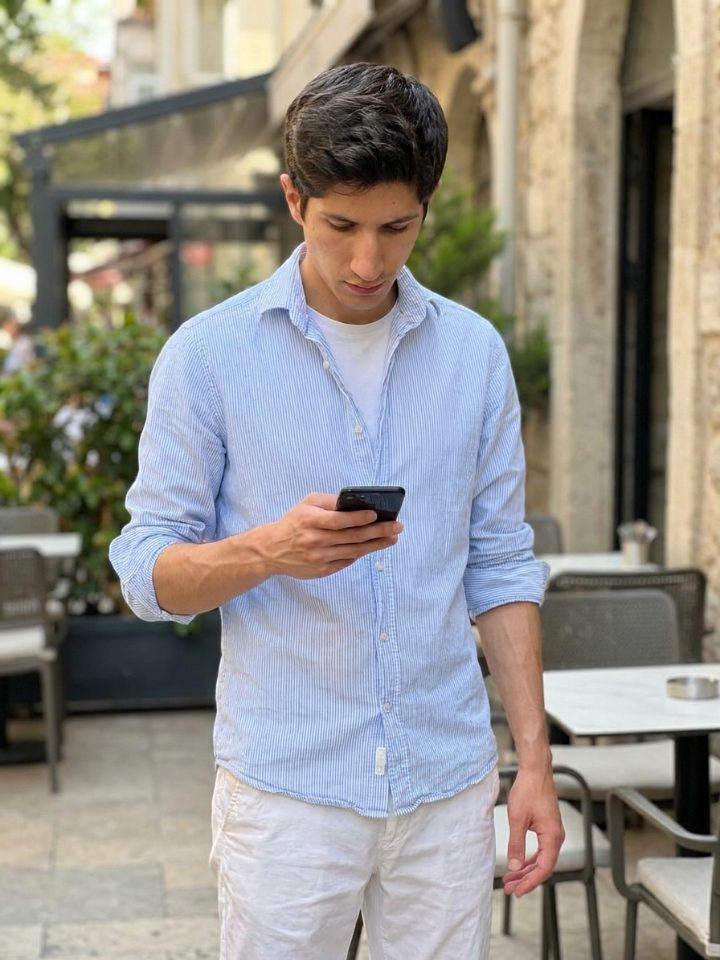 AFTER
0
AFTER
0
Reads in one secondDaylight, clear face, relaxed posture.
RateSelf tells you which shot should lead, and reads your bio for the one line she can actually reply to — then rebuilds your weakest photo so you can see the version that works before you post it.
One example. Your profile gets its own read.
No matches on Bumble? Here is what is actually going wrong
Four things cause it almost every time, and on Bumble they are not in the same order as on Tinder.
First, the main photo does not read in the opening second — face too small, too dark, or lost in a group.
Second, the bio gives her nothing to open with, so the match expires unanswered at the 24-hour mark; on Tinder an empty bio costs you a little, here it costs you the conversation.
Third, the order is wrong and your strongest shot sits in slot three where nobody scrolls to it.
Fourth, the set has no variety, and five near-identical photos give a viewer nothing to hold on to.
The free review tells you which one is costing you most, and the order to fix them in.
Why do my Bumble matches expire before anyone writes?
Because the profile gives no obvious way in. She has 24 hours and a queue of matches; the one that gets written to is the one with a visible line to pull on — a recognisable place, an opinion, something odd in a photo. A profile can be perfectly good-looking and still be the hardest one in the list to message. That is the gap the review is looking for.
Why did my matches suddenly stop on Bumble?
A sudden drop almost never means the app broke. Three things cause it. You changed something recently — a new main photo, a rewritten bio, a different age or distance setting — and the change performed worse than what it replaced. Or your activity pattern changed: long gaps between sessions, or a burst of swiping right on everything, both reduce how widely you get shown. Or nothing changed on your side and the local pool simply thinned out. Start by putting back whatever you changed last, then look at the profile itself.
Am I shadowbanned on Bumble?
Almost certainly not. Bumble already feels emptier than Tinder on the same photos, for a reason that has nothing to do with bans: matches expire at 24 hours, so the ones nobody wrote to quietly disappear and the app looks dead. Ordinary distribution does the rest — profiles that get passed repeatedly are shown to fewer people over time, which feels identical to being hidden. A real restriction follows a report or a terms violation and normally comes with a notice. Check the first photo and the bio before assuming anything else.
I get matches on Bumble but nobody writes. Why?
This is the Bumble-specific version of the problem, and it is not the same as getting no matches at all. A match means the photos did their job; the silence after it is about what the profile gives her to say. She has 24 hours, a queue of matches, and no obligation — so the profile that gets written to is the one with something to grab: a place she recognises, an opinion worth arguing with, something odd in a photo she has to ask about. A bio of adjectives gives her nothing, and the match runs out. The review reads your bio for that missing line and tells you which photo would have prompted a question.
How many matches is normal on Bumble?
There is no universal number, and any site quoting one is guessing. It swings enormously with your city, your age range, how far you are willing to travel and how many people are active near you. A useful benchmark is your own history: compare this week to a week when the same profile was doing better. If the profile changed in between, that change is your suspect. If nothing changed, the pool did.
Should I delete my Bumble account and start over?
Usually not, and it is the most over-recommended advice on the internet. A new account can get a short visibility bump, but it also throws away your existing matches and conversations, and the profile that was not working is still the profile you rebuild with. Fix the photos and the order first. If you rebuild without changing anything, you land back where you started within a couple of weeks.
Does Bumble Premium or Boost get you more matches?
They buy visibility and time, not appeal. Boost puts you in front of more people; Premium lets you extend a match past the 24-hour window. Neither changes what someone decides when they look at your profile, and extending a match that gave her nothing to say only buys another day of silence. Fix the first photo and the bio first — paid features are worth far more once the profile itself is converting.
What makes a good main photo on Bumble?
One person, clearly you, face large enough to read on a small screen, lit from the front, eyes visible, and a genuine expression rather than a held pose. No sunglasses, no cap pulled low, no group shot where a stranger has to work out which one you are, and no mirror selfie as the opener. Everything else — the gym shot, the travel shot, the friends shot — belongs later in the set, where it adds range instead of costing you the first second.
How many photos should I upload?
One photo is enough to get a review. Upload every shot you use on Bumble and you also get an ordering recommendation — order is the most overlooked factor in how long your profile stays open.
What happens to my photos?
Your photos are processed for the review only. They are never shared and never published, and you can ask for them to be deleted after the review.
What do I get in the free review?
Your profile score, a first-impression read and your single most critical fix are free. Per-photo scores, the full breakdown, a ready-to-paste bio and the AI-enhanced photo preview unlock with a package. There is no subscription — packages are one-time payments.
Your photos are processed for the review only. Never published, never shared; deleted whenever you ask. Privacy Policy · Terms of Use