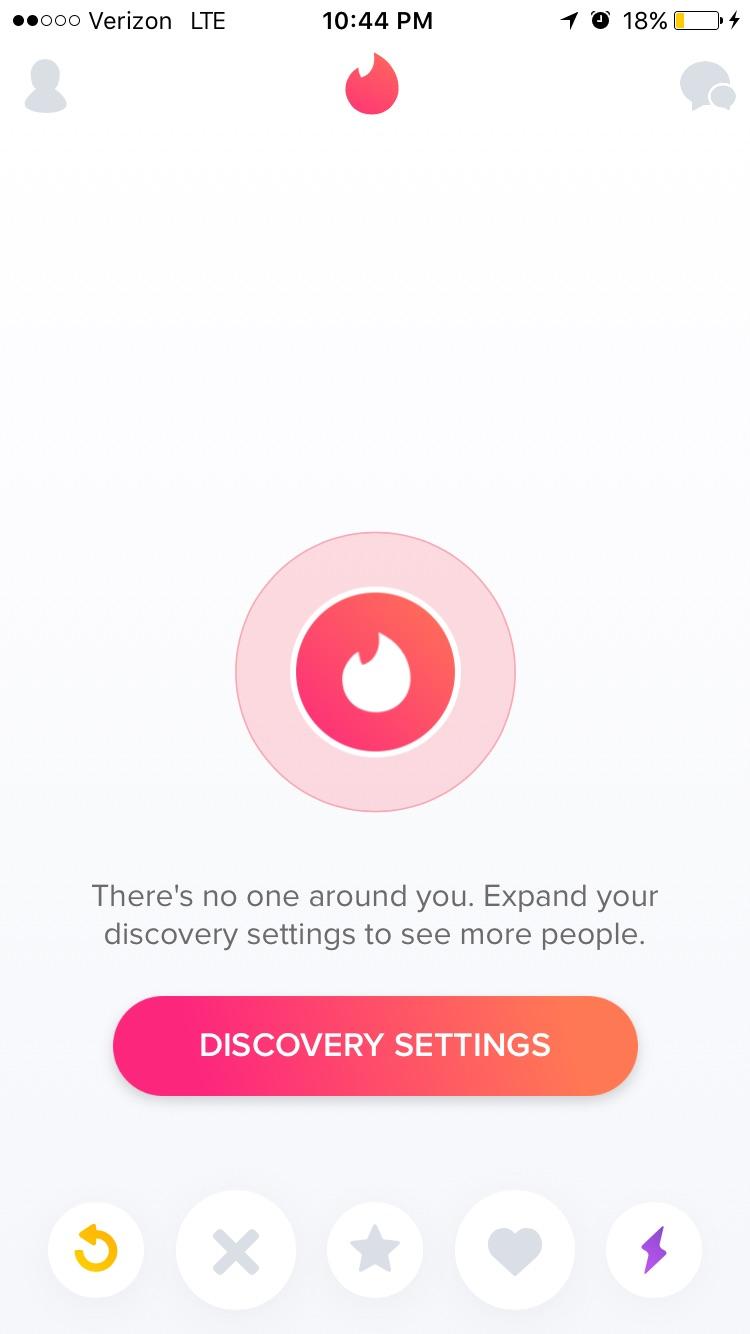
Tinder Boost: When to Use It (and When It's a Waste)
Will a Boost even help your profile?
A Boost only multiplies what your photos already do. See what people actually see before you spend on visibility.
- Your photos are never published and are deleted automatically within a week.
- The review opens right here on this page, nothing else to visit.
- First review is free, no sign-up; you see the score and the first fix right away.
- Which photo should lead
- One concrete fix first
- Clear read on your lead photo
Free, no sign-up — check the photo before paying for the Boost.
A Tinder Boost gives you 30 minutes at the top of the swipe stack — Tinder claims up to 10x more visibility. That sounds great until you realize a Boost is just a traffic spike. If the profile people land on isn't converting, you're burning money to get ignored faster.
Here's how to use it so it actually pays off.
What Does a Boost Actually Do on Tinder?
When you activate a Boost, Tinder temporarily prioritizes your profile in the swipe queue for people near you. More people see your first photo. That's it. The algorithm doesn't change how it scores your profile long-term — the effect ends when the 30 minutes are up.
→ Getting no matches on Tinder already? See why before you spend on a Boost.
Before you buy a Boost
Free check on the photo Tinder shows first during a Boost.
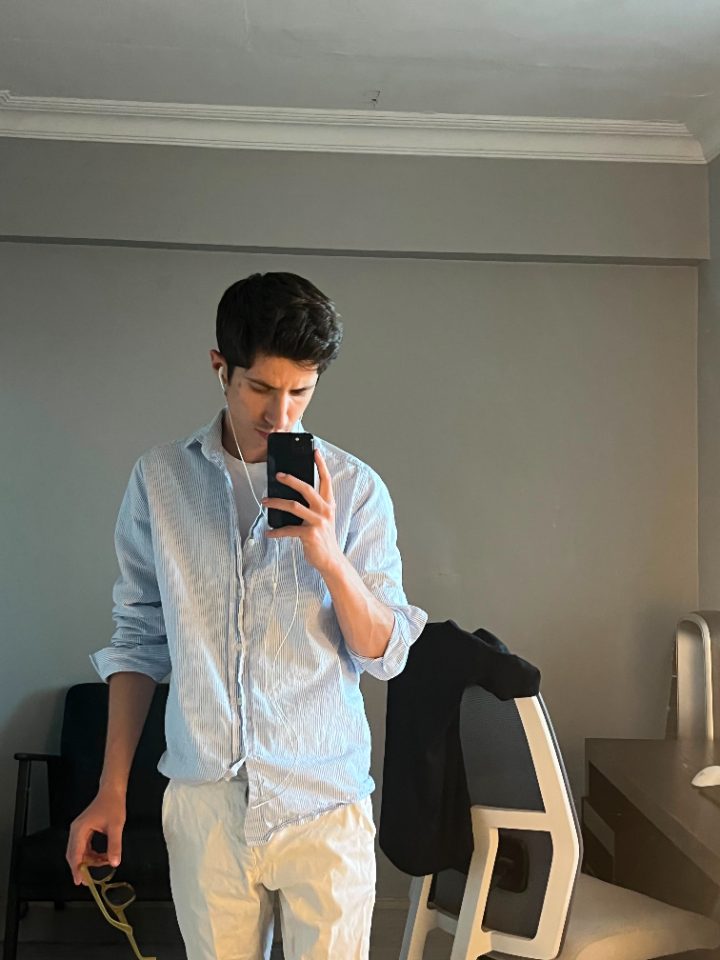

One underrated detail: Tinder gives you a small post-Boost bump for a few hours after it ends. Matches that come in during that window still count toward your ELO-style score, which can improve your organic reach for days afterward. That's the real upside — not just the 30 minutes.
When Should You Use Tinder Boost?
Timing a Boost in tinder matters more than most guys think. Peak swipe times mean more active users in your queue — and more active users means faster, more competitive swiping. You want to be visible when people are actually on the app.
- Best day: Sunday evening
- Best time: 9 PM – 10 PM local time
- Runner-up: Thursday–Saturday, 8–10 PM
- Worst time: Monday morning, mid-afternoon on weekdays
Sunday night is the sweet spot because people are home, bored, and swiping before the work week. Thursday and Friday evenings are second-best — users are in a social mood and actually checking the app with intent.
What About Location?
If you're in a dense urban area (NYC, LA, Chicago), peak hours are more forgiving because there's always volume. In smaller cities or suburbs, Sunday 9 PM matters even more — miss that window and your Boost hits a near-empty queue.
Is Tinder Boost Worth It If You Have No Matches?
This is the question that actually matters. If you're already getting no matches on Tinder, a Boost won't fix that. You'll get more eyes on a profile that isn't working — and Tinder's algorithm will read those non-swipes as negative signal.
The math is brutal: if 1,000 people see your profile during a Boost and 950 swipe left, that tanks your score. A Boost only multiplies what's already there. If what's there is a weak first photo and a blank bio, you're paying to accelerate failure.
The move is to fix the profile before you Boost it. That means auditing your photos with the same bluntness a stranger would bring — not asking friends who'll be nice about it. Tools like RateSelf's Tinder profile analyzer score each photo individually and flag exactly what's killing your first impression before you waste a Boost on it.
Rough estimate based on your recent match rate — use it to decide before you pay for a Boost.
How Many Boosts Should You Buy?
Boosts are sold in packs. The per-unit cost drops with bigger packs, but don't let that trick you into over-buying. Most guys see diminishing returns after 2–3 Boosts in the same location — you've already hit most of the active users in your radius.
- 1 Boost: Test run — use it on a Sunday at 9 PM after fixing your photos
- 5-pack: Worth it if you're traveling or moving to a new city
- 10-pack: Only makes sense if you're actively optimizing and tracking results
Don't stack Boosts back-to-back. Space them at least a week apart so you're hitting fresh users, not the same people who already swiped on you.
Boost vs. Other Tinder Features: Quick Comparison
Super Boost (Gold/Platinum) gives you up to 3 hours of top placement and is sold during peak hours automatically — it costs more but compounds the post-Boost effect. Worth it if your profile is already performing well.
Tinder Gold's Likes You feed is often more cost-effective than Boosts alone — you see who already swiped right, so you're converting warm leads instead of cold traffic. If your match rate is low, fix the core profile issues for guys before spending on either.
The Real ROI Question
A Boost costs roughly $3–6 depending on your plan. One good match that turns into a date is worth far more than that. But only if the profile earns the swipe. The highest-leverage thing you can do right now isn't buying a Boost — it's finding out which of your photos is quietly killing your results, then fixing it.
Once you know your profile is working, a well-timed Boost on a Sunday night is one of the cheapest ways to accelerate your results on Tinder. Do it in that order.
How Much Does a Tinder Boost Cost?
Tinder does not publish a fixed Boost price — the cost is set dynamically inside the app — but most U.S. users currently see single Boosts priced somewhere between roughly $4 and $8, with 5-packs and 10-packs dropping the per-Boost price to around $3–$5 each.
→ A Boost multiplies your profile — see what it's multiplying, free.
That vagueness is deliberate on Tinder's part, and it's worth understanding before you buy. Tinder uses dynamic pricing, meaning the number you see in your app can differ from what your friend sees based on your location and market. Tinder has faced legal pressure over pricing practices in the past (notably a California case over age-based pricing), and today the only price that matters is the one displayed on your own screen under Profile → Boost or in the in-app store. Any article quoting an exact universal price is either outdated or guessing.
A few practical things the price screen won't tell you:
- Bulk packs only save money if you'll actually use them. Boosts don't expire quickly, but a 10-pack bought in frustration after a dry week is the most common wasted purchase we hear about. Buy one, test it at a good time, then decide.
- Super Boost costs several times more — typically in the $15–$30+ range per use depending on market — and runs longer. Tinder doesn't publish these prices either; check your own app.
- The real cost isn't the Boost, it's the repeat purchase. If your profile converts views poorly, you'll buy again, blame timing, and buy again. That loop is where the money goes. A single audit of your photos costs less than two Boosts and fixes the variable that actually determines your results.
Can I Get Tinder Boost for Free?
Yes, but only two legitimate ways exist: Tinder Plus, Gold, and Platinum subscribers get one free Boost every month as part of the subscription, and Tinder occasionally hands out free Boosts through official in-app promotions — there is no reliable way for a free-account user to claim a Boost without paying.
The monthly subscriber Boost is the one most people overlook. If you already pay for Gold or Platinum, check the Boost icon before buying anything — many subscribers sit on an unused free Boost without realizing it. If you're deciding between buying Boost packs regularly and subscribing, do the math: a subscription that includes a monthly Boost plus unlimited likes can undercut buying Boosts à la carte, depending on the prices shown in your app.
Beyond that, searches for 'Tinder Boost free' mostly lead to two dead ends: apps promising free Boosts in exchange for surveys or logins (these are credential-harvesting scams — never enter your Tinder or Facebook login anywhere outside the official app), and 'hacks' on video platforms that simply don't work because Boost is activated server-side by Tinder, not by anything on your phone.
Are Tinder Boost Codes on G2A or Other Sites Legit?
No — Tinder does not sell Boost codes through third-party marketplaces like G2A, and there is no official redeemable 'Boost code' product you can buy outside the app. Tinder has run official promo-code campaigns with brand partners, but those codes are distributed by Tinder itself, not resold. Listings on key marketplaces claiming to sell Boosts or Boost codes are either recycled promo codes that won't work, account-sharing schemes, or outright fakes. Buying purchases outside the official app also violates Tinder's Terms of Use, which puts your account at risk of a ban — and a banned account is expensive in a way no discount code offsets. If a Boost isn't purchased through the App Store, Google Play, or Tinder's own web checkout, treat it as illegitimate.
Why Is Tinder $500 a Month?
Tinder costs roughly $500 a month only if you're on Tinder Select, the invite-only tier Tinder launched in 2023 at $499/month — it's a completely separate product from Boost, offered to a tiny fraction of users, and irrelevant to the vast majority of people on the app.
Tinder Select is Tinder's answer to ultra-premium dating services. Publicly confirmed details: it's invitation-only (Tinder has said it's offered to well under 1% of users), and it includes features like the ability to send a message before matching, increased visibility among Tinder's most sought-after profiles, and a Select badge. Tinder does not publish the exact criteria for receiving an invite.
Here's why this matters for someone researching Boost: the existence of a $499 tier tells you how Tinder's visibility economy works. Attention on the app is the product, and Tinder sells it at every price point — a few dollars for 30 minutes at the top of the stack, hundreds for permanent priority placement. None of these tiers change what people see when your card appears. Whether your profile was surfaced by a $5 Boost or a $499 subscription, the viewer spends the same two seconds on your first photo. That's the part no amount of spending buys, and it's why auditing your profile before paying for visibility is the only order of operations that makes financial sense.
What Does Reddit Actually Say About Tinder Boost?
The Reddit consensus on Tinder Boost is blunt: it multiplies whatever results your profile already gets, so users with strong profiles report several times their normal likes during a Boost, while users with weak profiles routinely report paying for 30 minutes of nothing.
If you read through r/Tinder and r/SwipeHelper threads on Boost, the same patterns repeat, and they're worth summarizing honestly because they match what we see in RateSelf audit data:
- 'Boost with zero likes' threads are almost always a profile problem, not a Boost problem. Tinder's own support page for 'used Boost and didn't get new matches' ranks on this exact search — that's how common the complaint is. Boost guarantees views, not likes. If 10x the views produces zero likes, the profile is converting at effectively 0%, and the tenth Boost won't change that.
- Timing debates are overrated relative to profile debates. Redditors argue endlessly about Sunday 9 PM versus weeknights, but the users posting good Boost results almost always have visibly strong photos. In our audits, the gap between a weak and strong first photo dwarfs any gap between a mediocre and optimal Boost time.
- One recurring genuine question: does Boost show you to people you already swiped on? Tinder doesn't publish exactly how the boosted queue is built. What's confirmed is that Boost pushes you toward the front of the stack for people actively swiping in your area during the window. People who already swiped left on you are generally not re-served your card in the short term, though Tinder is known to recirculate profiles over longer periods. Anyone claiming to know the exact mechanics is guessing — Tinder has never documented it.
- The gender split is real in anecdotes. Women and highly photogenic men report the strongest Boost returns; average-profile men report the weakest. This isn't Boost being 'broken' — it's a multiplier applied to an already skewed distribution of attention.
The takeaway Reddit keeps arriving at, thread after thread: Boost is a lens, not a filter. It makes more people look. What they see when they look is the only thing you actually control.
Frequently Asked Questions
What is the best time to use a Tinder Boost?
Sunday evening between 9 and 10 PM local time is the most consistently reported peak window, when the largest share of users are actively swiping. Weeknights between 8 and 10 PM are a solid second choice. Avoid weekday mornings and afternoons, when active swipers are scarce and your 30 minutes reach far fewer people.
How long does a Tinder Boost last?
A standard Boost lasts 30 minutes from the moment you activate it, and it cannot be paused or rescheduled once started. Super Boost runs longer — Tinder markets it in multi-hour windows — and costs several times more. Unused Boosts sit in your account until you trigger them.
Why did my Boost get no likes?
Because Boost only increases how many people see your profile — it doesn't change how they react to it. If a normal session gets you near-zero likes, ten times the views of the same profile still rounds to zero. Fix the first photo and bio before spending on another Boost; that's the conversion side of the equation.
Can other people tell I'm using a Boost?
No — your card looks identical to everyone else's when it appears in someone's stack. The purple lightning bolt you see on matches made during a Boost is visible to you, so you can tell which matches came from the Boost window. Tinder does not label boosted profiles to the people viewing them.
Does a Boost show my profile to people who already swiped left on me?
Tinder doesn't publish the exact mechanics, so no one outside the company knows for certain. What's confirmed is that Boost prioritizes your card for people actively swiping nearby during the window, and left-swiped profiles are generally not re-served in the short term. Tinder does recirculate profiles over longer periods, but Boost isn't documented as a way to force a second look.
Should I buy a Boost or subscribe to Tinder Gold instead?
If you'd buy more than one or two Boosts a month, check the subscription math first — Plus, Gold, and Platinum all include one free Boost monthly plus other features, and can undercut à la carte Boost packs. If you only want occasional visibility spikes at peak times, single Boosts are the cheaper route. Prices vary by market, so compare inside your own app.
Check your photos before your next Boost
Free check on the photo Tinder shows first during a Boost.
Get Matches Before PayingNo sign-up · First review free · Results in under 2 minutes