Know Exactly Why They Swipe Past You
Somebody sees your card and decides in a second — you just never see the moment it happens. One tap shows you that moment, swiper's-eye view.
- Your photos are never published and are deleted automatically within a week.
- The review opens right here on this page, nothing else to visit.
- First review is free, no sign-up; you see the score and the first fix right away.
- More matches this week
- Replies instead of silence
- A full match list again
Every night you wait, more people swipe left.
If you are getting no matches on Tinder, you already suspect the answer is not just bad luck — and you are right. Tinder is brutally meritocratic in one specific way: the first photo either earns a stop in under two seconds, or it does not. Everything else — your bio and prompts, your height, your opener — only matters if that photo clears the bar. Zero matches almost always traces back to one of four separate problems: your profile is barely being shown to anyone, it is being shown and skipped, your own settings have shrunk the pool to almost nobody, or your account is restricted. Those four need completely different fixes, which is why generic advice keeps failing you. This guide shows how to tell which one you have. If you want the short route, the free Tinder profile review scores your actual photos and tells you which one is costing you matches.
Upload your Tinder photos and get a per-photo score, a ranked photo order, and specific fixes — in under 60 seconds.

Why am I getting 0 matches on Tinder?
Literally zero matches — not few, but none across hundreds of swipes — almost always comes down to one of four problems: a distribution problem (your card is barely shown), a presentation problem (it is shown and skipped), a settings problem (your own filters strangled the pool), or an account problem (a restriction or review). Work through them in that order, because a beautiful profile with broken settings still gets zero, and a wide-open pool with a bad lead photo still gets zero.
Check the settings problem first — it takes 60 seconds
Open Settings and confirm four things: Show me on Tinder is on, your distance is not set to a mile or two, your age range is not a four-year sliver, and no incognito-style option from a past subscription is still running. If you ever switched on Passport for a trip and forgot it, you may be swiping in a city you do not live in. Tinder does not tell you how many profiles are in your area, so you cannot see from inside the app whether your pool is 40 people or 4,000 — the one signal you get is how fast you run out of cards. Running out of new profiles in a few minutes is the tell that the pool, not the profile, is the bottleneck. In a car-built metro, a small radius is not selectivity; it is a blackout.
Then separate distribution from presentation
This is the distinction almost nobody makes cleanly. Distribution is how many people see your card. Presentation is what happens when they do. From the inside both look identical: zero. The rough test is swipe volume. Swipe right deliberately — not on everyone, on people you would actually message — across 200 to 300 profiles over a week. If a few matches come back, distribution is fine and the photos are the problem. If absolutely nothing comes back at that volume with wide-open settings, distribution is suspect, and the shadowban section below is for you.
The account explanation is real but rare, and it is the last one to reach for, not the first.
Your lead photo is doing more damage than you realize
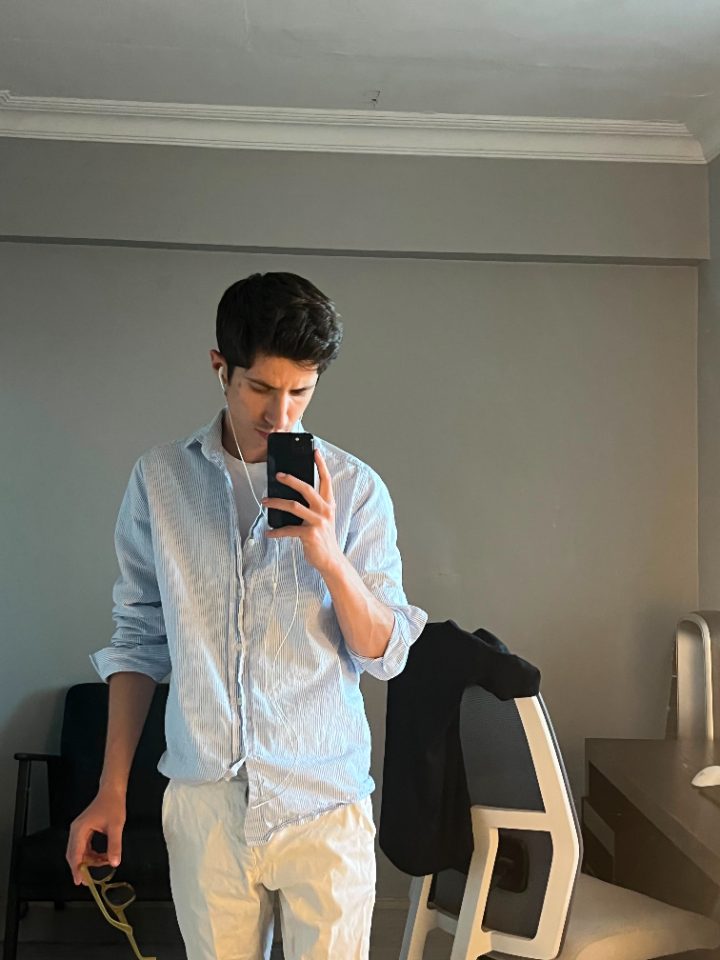
In the profiles we review at RateSelf, the overwhelming pattern behind zero-match accounts is not ugliness. It is illegibility: a stranger cannot answer the only question the lead photo has to answer — what does this person's face actually look like? Nobody swipes right on a guess. "Weak" rarely means dramatic; it means one of these:
- Low contrast or poor lighting — your face blends into the background on a small phone screen.
- A group shot leading — nobody plays "guess which one is you".
- Sunglasses or a cap hiding your eyes — eye contact is the fastest trust signal a photo has.
- Distance shots — if you are smaller than a thumbnail in your own photo, you have already lost.
- A forced or closed-mouth smile — it reads as nervous, not confident.
A natural, well-lit close-up where your eyes are visible and you look genuinely at ease will beat an exotic-location shot where you are a small figure in the frame, every single time. The frustrating part is that you cannot see this in your own photos: you know the story behind each one, so your brain fills in context a stranger's brain never gets. That is not a personal failing — it is how perception works. It is also why an outside, scored read of the set finds problems the mirror never will.
Why am I getting zero likes on Tinder?
On a free account, "zero likes" and "zero matches" are the same number to you — Tinder only shows who liked you on paid tiers, so on free, the only evidence a like ever existed is a match appearing. That matters, because "I am getting zero likes" is usually a conclusion you inferred, not something you observed.
The mechanic worth understanding: matches are reciprocal. Someone can like you and nothing happens until you also swipe right on them. If you swipe selectively — which you should — some of the people who liked you never surface in your deck before you stop for the night. Plenty of accounts that feel invisible are sitting on incoming likes they never reached. Two practical consequences:
- Swipe volume is your denominator. Fifteen right swipes a day is not a sample size; you cannot diagnose anything from it.
- Activity appears to matter. Tinder publicly said it retired the old Elo-style desirability score in 2019 and has never published what replaced it. What it does state plainly is that it prioritizes active users and mutual interest. Whatever the internals are, an account that opens the app twice a month behaves like a dead account.
One honest limit on all of this: nobody outside Tinder — not us, not any page ranking for this question — knows the ranking system's actual inputs. Anyone giving you a numbered breakdown of your "score" is guessing. What we can say from reviewing profiles at volume is which fixable elements correlate with people finally matching: the lead photo first, then photo variety, then a bio that gives someone a reason to reply.
No matches on Tinder after 2 or 3 days — is that normal?
Yes. For most men in most US markets, two or three days with zero matches sits well inside the normal range and is not evidence of a ban or a broken account. Tinder publishes no benchmark match rate, and real rates swing enormously with city density, age bracket and how selectively you swipe. Days elapsed is close to useless as a diagnostic.
Measure in right swipes, not days. Two to three hundred deliberate right swipes with zero matches is a signal worth acting on. Forty right swipes over three days is noise. This is also why the panic after two days is self-defeating: people change three things at once, get nothing, change three more, and now they cannot tell which change did what. Test one variable at a time:
- Change only the lead photo. Nothing else.
- Swipe at your normal rate for five to seven days, at a consistent volume.
- Compare the match count to the previous week at the same volume.
- If it moved, keep it and test photo two. If it did not, swap the lead photo again — not the bio.
The lead photo goes first because it decides whether anyone looks at the rest. A rewritten bio cannot rescue a photo nobody stops on, which is why "I rewrote my bio and got nothing" is such a common and such a predictable complaint.
- 1Turn on Show me on Tinder In Settings, confirm this toggle is on. If it's off, your card isn't shown to anyone, no matter how good your photos are.
- 2Widen your distance A radius of a mile or two in a car-built metro can shrink your pool to almost nobody. Push it out and see if new cards stop running out instantly.
- 3Widen your age range A four-year window is often narrower than it feels. Open it up while you diagnose, then tighten later once matches return.
- 4Check for leftover Passport or incognito settings If you used Passport for a trip or an incognito-style perk from a past subscription, confirm it's switched off — you may be swiping in the wrong city without realizing it.
- 5Watch how fast you run out of cards Running out of new profiles within minutes is the clearest sign the pool itself, not your profile, is the bottleneck.
I used to get matches. Now nothing. What changed?
The pattern where a profile worked for months and then quietly died has mundane explanations, and none of them require a conspiracy.
Pool exhaustion. The app has already shown your card to most of the active people in your radius; the ones who were going to swipe right already did. What is left is people who saw you and passed, plus a slow trickle of new users. From the inside, that feels like being switched off. Widening distance or age slightly — or using Passport for a week — confirms whether this is the issue.
Photo fatigue. A lead photo that earned stops two years ago has now been seen, in some markets, by nearly everyone — and repetition reads as furniture. Photos more than a year old may also no longer look like you, and that disconnect registers even when nobody can articulate it. A genuinely new lead photo — new setting, new light, taken by someone else — is a new first impression.
Swiping behavior. If you went through a phase of swiping right on everyone to "maximize chances", stop. Tinder retired the old Elo score in 2019 and does not publish what replaced it, so nobody can tell you your number went down — but indiscriminate mass-swiping is consistently followed, in the accounts we review, by worse reach, and it is the one behavior Tinder itself frames as low-quality. The fix is not deleting the account (that trade is covered in the shadowban section below); it is returning to deliberate swipes and giving the profile a better lead photo to distribute.
Seasonal and geographic shifts. User pools shrink in smaller cities and off-peak months. A college town in July is a thin pool, and no photo fixes arithmetic.
How do I know if I am shadowbanned on Tinder?
You cannot know for certain, because Tinder has never publicly confirmed shadowbanning exists as a feature, publishes no criteria for it and sends no notification — so anyone claiming to detect one definitively is telling you something they cannot know. What Tinder does confirm is that accounts violating its Community Guidelines can be banned, and a full ban is visible: you get an error at login (users commonly report code 40303) and cannot get back in with that account or phone number. If you can still log in and swipe normally, you are not hard-banned.
What people are actually describing
The "shadowban" described in forum threads is a state where the app works, swipes register, but matches stop dead — often after a run of reports, a mass-swiping session, a payment dispute, or a rebuilt account. Tinder does not comment on reduced-reach states, so treat this as a widely reported user experience, not documented policy. The signals people consistently cite: zero matches over several hundred right swipes where the same profile previously matched normally; a deck that feels recycled or runs out instantly in a dense area; changes that should move something — new lead photo, a paid Boost — moving nothing at all.
The only test worth running
Have a friend who lives near you set their filters to include your age and gender, then swipe through their deck and watch for your card. It is crude, it depends on their deck order, and one failed attempt proves nothing — but repeated over a couple of sessions, it is better evidence than any "shadowban checker" site, all of which are guessing from the same public information you have.
What to do instead of guessing
Contact Tinder support through help.tinder.com and ask directly whether there is any restriction on your account. It is the one route that can produce a real answer, and it costs nothing. Before anything drastic, rule out the dull explanations: settings, swipe volume, and a lead photo that cannot be read. In our review queue, the accounts convinced they were shadowbanned were far more often accounts with an unreadable first photo and a forty-swipe-a-week habit.
About deleting and remaking your account
The most repeated advice you will find is "nuke it and start over". Be clear about the trade. Tinder states that deleting your account permanently removes your matches, messages and purchase history, and if you have an active subscription bought through the App Store or Google Play, deleting does not cancel the billing — you cancel that with the store. Tinder does not publish whether new accounts get extra early visibility or whether repeat resets are penalized, so the "reset boost" everyone repeats is a user theory, not a confirmed mechanic. And if your matches stopped because the lead photo does not work, a fresh account carries that photo straight into the same wall.
I am attractive but getting no matches on Tinder
Attractive in real life and invisible on Tinder is a real pattern, and the explanation is almost always that your photos are a bad translation of your face rather than a bad face: bad lighting, a phone held too close, no eye contact, no photo where someone else clearly took the picture. Attractiveness in person includes movement, expression and voice. A card is one still image at thumbnail size, and it either reads or it does not.
Here is a straight verdict on the tricks circulating in the forum threads:
- "Swipe left on everyone for a week to reset your score." No evidence, and it contradicts the one thing Tinder has said publicly — the old Elo score was retired in 2019. There is no published score to reset. Meanwhile you spend a week generating zero chances of a match.
- "Set your age range to 18–19 to get pushed into younger decks." It does not do that. It just narrows who can see you. Pure folklore.
- "Buy a Boost and you will see instantly whether you are shadowbanned." Tinder describes Boost as putting your profile among the top profiles in your area for a limited window, but does not publish how many people that reaches, so a quiet Boost tells you very little. It also amplifies the same photo — if the photo is the problem, Boost buys you more people skipping you faster.
- "Delete the app for 30 days and it fixes itself." Unverified, and inactivity is the one thing Tinder does say it deprioritizes.
- "Photo verification helps." Defensible. Tinder offers verification and shows a badge, and the badge answers a real question a stranger has about whether you are a real person. It will not fix a bad lead photo, but it removes a reason to swipe left.
What actually moves the number, based on what changes when people re-review a profile after edits: a clear, well-lit lead photo taken by another person at eye level; a second and third photo that show something other than your face in a different setting; and one specific line in the bio that gives someone a thing to reply to. Unglamorous, and far more reliable than any algorithm hack.
Tinder profile tips for men that actually move the needle
Most public estimates put men well above half of Tinder's users, and in many cities the gap is wider — we have not measured it and will not quote a percentage, but the direction is not in doubt, and it thins your margin for error. Generic "be yourself" advice lands badly on men for exactly that reason. What actually changes outcomes:
The three-photo minimum. You need at least three photos that each do a different job: a clear face shot leading, one that shows you in a social or active context, and one that shows a hobby or personality. Each photo should answer a different unspoken question she has about you.
A short, specific bio. A blank bio costs you matches among the women who read before swiping — but a long, earnest paragraph is almost worse; it reads as try-hard. Two or three lines with something specific and slightly unexpected wins: "I make a genuinely good carbonara and I will fight you on the egg-to-pasta ratio" beats "I love to travel and try new food" every time. If writing it is the blocker, these bio lines are a working starting point.
Photo order as strategy. Your worst photo in slot three kills the momentum a strong lead built. Strongest face shot first, social proof second, personality third — and cut anything that introduces doubt: blurry shots, awkward poses, anything where you look visibly uncomfortable. There is a longer breakdown in how to get more likes on Tinder.
One warning about tip lists, including this one: they treat every profile as if it has the same problem, and yours does not. The guy with great photos and a dead bio needs different advice from the guy whose photos look fine on his own camera and unreadable at thumbnail size. The fix starts with knowing which element is failing you, and by how much.
Why am I not getting any matches on Tinder as a girl?
For women, zero matches is usually not a visibility problem — it is a filtering problem. The same reciprocal mechanic that makes men feel invisible makes women feel like nothing is coming in, when incoming likes are in fact sitting in a deck they have not worked through. On free Tinder you cannot see who liked you, and a match only happens when you also swipe right, so a slow, selective habit plus narrow filters can genuinely produce zero for days.
The causes we actually see in women's profiles, roughly in order of how often they turn out to be the answer:
- Filters too tight for the area. A five-mile radius plus a four-year age band in a mid-sized city can leave a pool of dozens, not thousands. Widen distance first — it is the least costly change.
- Low swipe volume. Twenty swipes a week cannot produce matches at any attractiveness level. The reciprocity requirement is absolute.
- The profile reads as a bot or promo account. One photo, heavy filters, no face, no bio, or anything that looks like it steers people off-platform gets reported — and Tinder is explicit that it removes and restricts spam and promotional accounts. Reports have consequences even when the account is real. Three ordinary, unfiltered photos and a two-line bio is the fastest way to stop looking fake.
- Account new, dormant, or under review. Reinstalling after months away can coincide with a dead stretch. Tinder does not publish how it treats these states, but it does confirm it prioritizes active users.
- Discovery switched off. Check that "Show me on Tinder" is on, and that no incognito-style setting from a past subscription is still running.
- Photos that hide you. The most common presentation failure in women's profiles is not unattractive photos — it is a group photo in every slot, so a stranger cannot tell which person is you and moves on rather than guess.
One more thing worth saying plainly: many women build cautious profiles on purpose — no face, no bio, no location cues — for good safety reasons. That caution is legitimate, and it also costs matches, because a card with nothing on it gives a stranger nothing to say yes to. The workable middle is clear face photos with no identifying background details — no workplace, no gym name, no street signs — and photo verification switched on, so people know you are real without you having to prove it in chat.
The fastest way to stop guessing
If you have been stuck at zero — or at a frustratingly low number — the most efficient move is to get a specific, scored breakdown of what is wrong before you change anything. Changing the wrong thing first wastes weeks, and if you ever do rebuild the account, it wastes that fresh start on the same weak profile.
The free Tinder profile review scores every photo you actually use, tells you which one is your weakest link and what it projects to a stranger in the first two seconds, then suggests the order — in about two minutes, no sign-up. Sometimes the answer comes back that the photos are fine and the market is thin. We would rather tell you that than sell you a trick. Fix the right things, in the right order, and give it a week of normal swiping before you judge.
Frequently Asked Questions
Does deleting and remaking my Tinder account actually help?
Tinder doesn't publish whether new accounts get extra visibility or whether repeat resets are penalized, so the "reset boost" is a user theory rather than a confirmed mechanic. What is confirmed is the cost: deleting removes your matches, messages and conversation history permanently, and an App Store or Google Play subscription keeps billing until you cancel it with the store. If your photos are the reason nothing lands, a new account inherits the same problem.
Can hitting the daily like limit hurt my chances?
Free Tinder accounts have a cap on right swipes within a rolling period, and Tinder says the limit can vary rather than publishing one fixed number. Hitting it isn't a punishment, but bulk-swiping to reach it is a bad strategy: indiscriminate right-swiping produces low-quality matches and gives you no usable data about what's working. Deliberate swiping at a steady volume is what makes your results readable.
Does turning Passport on or off change who sees me?
Passport moves your discovery location, so while it's active you're being shown in that city rather than your own. People often switch it on to browse another city and forget it, then wonder why local matches dried up. If matches stopped suddenly, checking your location setting is a 10-second fix worth doing before anything else.
Should I fix my photos or my bio first?
Photos, without exception. The lead photo decides whether anyone reads the bio at all, so bio edits on a profile with a weak first photo produce no measurable change — which is why so many people report rewriting their bio five times with zero effect. Get the lead photo right, then use the bio to give a specific opening line to reply to.
Does photo verification get you more matches?
Tinder offers photo verification and shows a badge on verified profiles, which removes one real reason strangers swipe left — the suspicion that a profile is fake or stolen. Tinder doesn't publish any match-rate uplift figure for it, so treat it as removing an objection rather than boosting reach. It's free, takes a minute, and matters most on profiles with few photos.
How long should I wait before judging a profile change?
Give each change 5–7 days at your normal swipe volume, and change only one thing at a time. Judging by days alone is unreliable because match rates depend on your city's density and how selectively you swipe; roughly 200–300 deliberate right swipes is a sample you can actually read. Changing photos, bio and settings together guarantees you'll never learn which one mattered.
Is it normal to have no matches on Tinder after 3 days?
For a brand-new account, no — new profiles get a visibility boost, so early silence usually means the photos are losing swipes. For an established account, a quiet 3 days can be normal math. Three weeks of zero matches is not, and points to a profile or visibility problem.
How do I know if I'm shadowbanned on Tinder?
The strongest test is a Boost: if it produces zero new views or likes, combined with a frozen likes counter and matches who suddenly never reply, you're likely shadowbanned. If a Boost gets you views but no matches, you're not banned — your profile is being seen and swiped left on.
Does deleting and remaking my Tinder account get me matches?
It buys you a temporary new-account boost, roughly 72 hours of extra visibility. If you remake with the same photos, your score decays back within one to two weeks, and rapid account cycling risks a real shadowban. Fix your photos first, then reset if needed.
How rare is it to get a match on Tinder?
For men, quite rare per swipe — only a few percent of right-swipes come back as matches, so long dry stretches are mathematically normal. For women, matches are far more frequent, so zero matches usually signals a settings issue, a shadowban, or a nearly empty profile rather than low attractiveness.